

Best AI Tools for Beginner Investors: The Complete Guide to Smarter Investing
Artificial intelligence is changing the way people learn, research, and invest.
Just a few years ago, beginner investors had to spend hours searching through financial reports, market news, and educational resources.
Today, AI tools can help simplify much of that process.
They can:
- Explain investing concepts
- Summarize financial information
- Identify trends
- Improve research workflows
- Save time
However, there is also a lot of confusion surrounding AI.
Some people believe AI can predict the market.
Others assume AI can replace investing knowledge entirely.
Neither is true.
The smartest investors use AI as a tool—not as a substitute for critical thinking.
This guide will show you exactly how beginner investors can use artificial intelligence responsibly and effectively in 2026.
If you’re completely new to investing, start with:
How to Start Investing in 2026
which explains the fundamentals of building a long-term investing strategy.
This guide focuses specifically on how AI can support that journey.
Table of Contents
- Why AI Is Transforming Investing
- What AI Can and Cannot Do
- Why Beginner Investors Should Use AI
- The AI-Assisted Investor Framework
- Best AI Tools for Beginner Investors
- How to Build an AI-Powered Investing Workflow
- Common AI Investing Mistakes
- Frequently Asked Questions
- Final Thoughts
Why AI Is Transforming Investing
Artificial intelligence is not changing investing itself.
What it is changing is access to information.
Historically, professional investors had significant advantages because they had access to:
- Research teams
- Data providers
- Market analysis tools
- Expensive software
Today, many AI-powered platforms help level the playing field.
Beginner investors can access tools capable of:
- Organizing information
- Summarizing research
- Automating analysis
- Improving productivity
This makes investing education more accessible than ever.
AI Does Not Replace Investing Fundamentals
One of the biggest misconceptions surrounding AI is that technology can eliminate the need for investing knowledge.
In reality:
AI works best when combined with strong investing fundamentals.
Before relying on AI tools, every investor should understand:
- How the stock market works
- Stocks versus ETFs
- Diversification
- Risk management
The following guides can help:
Portfolio Diversification for Beginners
What AI Can and Cannot Do
Understanding AI’s strengths and limitations is essential.
Many beginner investors either trust AI too much or ignore it entirely.
Both approaches can be problematic.
What AI Can Do
AI can help:
Simplify Complex Concepts
For example:
A beginner can ask:
“What is an ETF?”
and receive a simple explanation within seconds.
Accelerate Research
AI can summarize:
- Earnings reports
- Market news
- Financial concepts
This saves significant time.
Improve Learning
Many AI tools act like personal tutors.
They can explain concepts repeatedly until users understand them.
This is particularly valuable for investors still learning the basics.
Support Decision-Making
AI can help investors:
- Compare options
- Organize information
- Identify potential risks
However, the final decision should always remain with the investor.
What AI Cannot Do
AI cannot:
Predict Markets Reliably
No AI tool can consistently predict future market movements.
Anyone claiming otherwise should be approached with caution.
Eliminate Risk
All investments involve risk.
AI cannot remove uncertainty from investing.
Guarantee Returns
No tool can guarantee profits.
Investing always involves the possibility of loss.
Educational resources from:
- SEC Investor Education
- FINRA Investor Education
consistently emphasize this principle.
Why Beginner Investors Should Use AI
Used properly, AI can provide several advantages.
Faster Learning
Investing has a learning curve.
AI helps shorten that curve by making information easier to understand.
Better Research Efficiency
Rather than spending hours gathering information, investors can focus on understanding and decision-making.
Improved Confidence
Many beginners hesitate because they feel overwhelmed.
AI can help answer questions quickly and reduce confusion.
Reduced Information Overload
Modern financial markets generate enormous amounts of information.
AI helps filter and organize that information.
The AI-Assisted Investor Framework
The smartest approach is not:
“Let AI invest for me.”
The smarter approach is:
“Use AI to become a better investor.”
Think of AI as an assistant.
Not a replacement.
A practical framework looks like this:
Step 1
Learn concepts using AI.
Step 2
Research investments using AI.
Step 3
Verify information using trusted sources.
Step 4
Build a diversified strategy.
Step 5
Make informed decisions.
Step 6
Continue learning.
This framework aligns perfectly with the mission of Invest Smart Edge:
Helping beginners learn investing with more confidence and less confusion.
In the next section, we’ll review the best AI tools available in 2026, including:
- ChatGPT
- TradingView
- Finviz
- TrendSpider
- Gemini
- Perplexity
- AI Portfolio Tools
and explain exactly when, why, and how beginners should use each one.
The Best AI Tools for Beginner Investors in 2026
Now that we’ve established what AI can and cannot do, let’s examine the most useful tools available to beginner investors.
The goal is not to use every tool.
The goal is to use the right tool for the right task.
Many beginners become overwhelmed because they try to learn too many platforms at once.
A smarter approach is building a simple AI-powered investing toolkit that grows with your experience.
1. ChatGPT
Best For
- Learning investing concepts
- Understanding financial terminology
- Research assistance
- Portfolio education
- ETF comparisons
- Investment brainstorming
Official Website:
Why Beginners Love ChatGPT
For many investors, ChatGPT acts like an on-demand investing tutor.
Instead of spending hours searching multiple websites, beginners can ask direct questions such as:
- What is an ETF?
- How does diversification work?
- What is the difference between stocks and bonds?
- How does compound interest work?
This ability to simplify complex topics makes ChatGPT one of the most valuable learning tools available today.
Example Use Case
A beginner investor wants to understand:
“Should I buy stocks or ETFs first?”
ChatGPT can explain:
- Benefits
- Risks
- Common beginner mistakes
- Long-term considerations
before the investor makes a decision.
For a deeper comparison, readers should also review:
Strengths
✔ Excellent educational tool
✔ Fast explanations
✔ Great for brainstorming
✔ Beginner-friendly
✔ Available 24/7
Limitations
✘ Not a financial advisor
✘ May occasionally provide incomplete information
✘ Requires fact-checking for critical decisions
Beginner Score
⭐⭐⭐⭐⭐ (5/5)
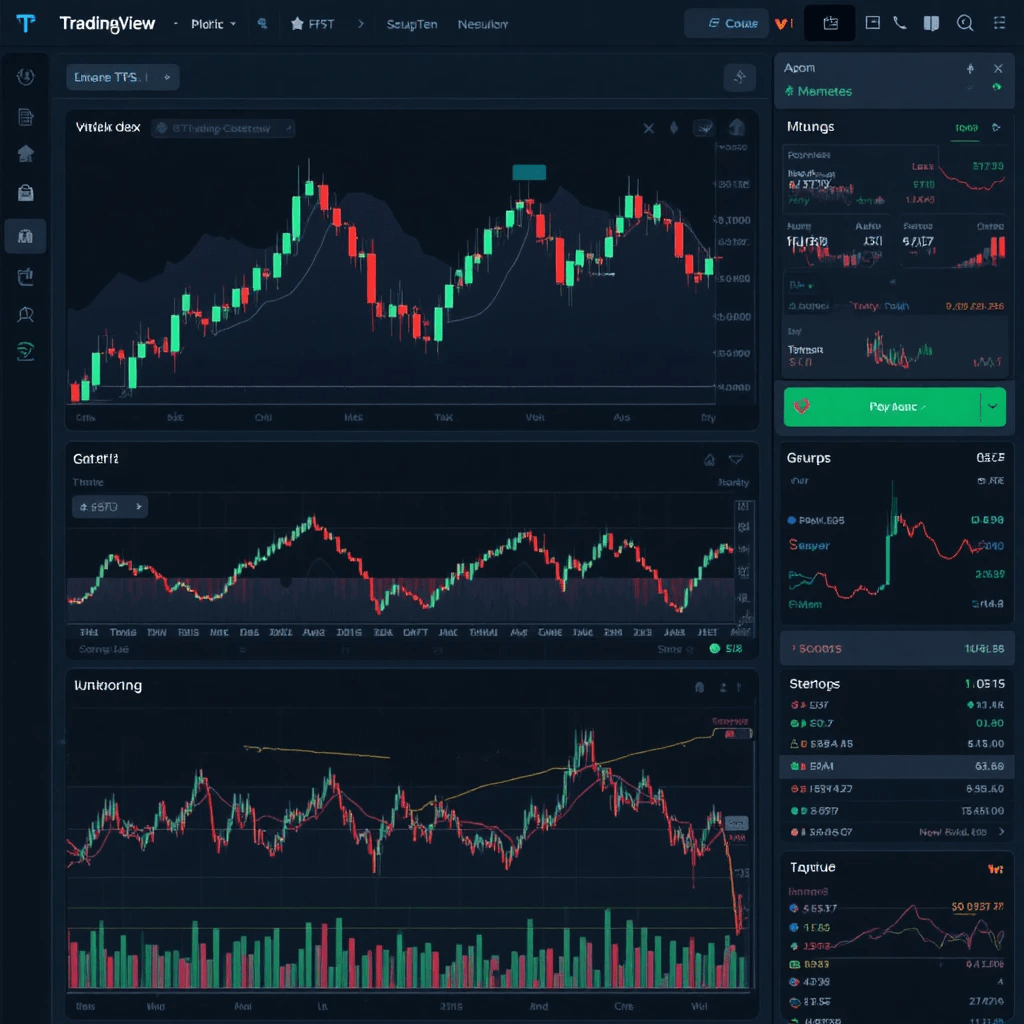
2. TradingView
Best For
- Chart analysis
- Market monitoring
- Technical analysis
- Alerts and watchlists
Official Website:
Why TradingView Is Popular
TradingView has become one of the most widely used market analysis platforms in the world.
Its strengths include:
- Interactive charts
- Custom indicators
- Market screening
- Large investing community
Even investors who focus primarily on ETFs often use TradingView to monitor markets.
Learn More
Read our complete guide:
TradingView Review 2026: Is It the Best Charting Platform for Beginner Investors?
Example Use Case
Suppose you’re researching an ETF.
TradingView can help you:
- View long-term performance
- Analyze trends
- Compare ETFs
- Monitor price movements
This can improve your overall understanding of market behavior.
Strengths
✔ Professional-grade charts
✔ User-friendly interface
✔ Strong community features
✔ Excellent market coverage
Limitations
✘ Learning curve for beginners
✘ Some advanced features require paid plans
Beginner Score
⭐⭐⭐⭐⭐ (5/5)
FREE AI INVESTOR TOOLKIT
No Spam
3. Finviz
Best For
- Stock screening
- Market overviews
- Opportunity discovery
- Fundamental filtering
Official Website:
Why Investors Use Finviz
Finviz helps investors filter large numbers of stocks quickly.
Instead of manually reviewing thousands of companies, investors can create filters based on:
- Market capitalization
- Industry
- Dividend yield
- Valuation metrics
- Growth characteristics
This dramatically reduces research time.
Learn More
Read our complete guide:
Finviz Review 2026: Is It the Best Stock Screener for Beginner Investors?
Example Use Case
A beginner wants to find:
“Large, profitable companies that pay dividends.”
Finviz can identify candidates within seconds.
Strengths
✔ Powerful stock screener
✔ Easy market visualization
✔ Strong free version
✔ Useful for idea generation
Limitations
✘ Focused primarily on stock screening
✘ Less beginner-friendly than ChatGPT
Beginner Score
⭐⭐⭐⭐☆ (4.5/5)
FREE AI INVESTOR TOOLKIT
No Spam.
4. TrendSpider
Best For
- Automated technical analysis
- Trend identification
- Strategy automation
- Market scanning
Official Website:
What Makes TrendSpider Unique?
TrendSpider uses automation to simplify technical analysis.
Instead of manually drawing trend lines and identifying patterns, the platform helps automate many of these tasks.
This can save significant time for investors interested in market analysis.
Learn More
Read our complete guide:
TrendSpider Review 2026: Is It the Best Automated Market Analysis Platform for Beginner Investors?
Example Use Case
An investor wants to identify:
- Support levels
- Resistance levels
- Trend changes
TrendSpider can automate much of this analysis.
Strengths
✔ Powerful automation
✔ Advanced charting
✔ Time-saving features
✔ Strong scanning capabilities
Limitations
✘ More advanced than most beginners need initially
✘ Higher learning curve
✘ Premium pricing
Beginner Score
⭐⭐⭐⭐☆ (4/5)
FREE AI INVESTOR TOOLKIT
No Spam.
5. Google Gemini
Best For
- Research assistance
- Market explanations
- Summarizing information
- General investing education
Official Website:
Why Gemini Is Useful
Gemini offers many of the educational benefits associated with conversational AI.
It can help investors:
- Understand concepts
- Compare investments
- Organize information
Many investors use both Gemini and ChatGPT because each may provide slightly different perspectives.
Example Use Case
A beginner investor asks:
“What are the risks of investing in ETFs versus individual stocks?”
Gemini can provide a structured overview that helps support further research.
Strengths
✔ Strong conversational AI
✔ Easy access
✔ Helpful educational tool
Limitations
✘ Information still requires verification
✘ Not a substitute for due diligence
Beginner Score
⭐⭐⭐⭐☆ (4.5/5)
6. Perplexity
Best For
- Research
- Source discovery
- Fact verification
- Market education
Official Website:
Why Perplexity Stands Out
One challenge with AI is verifying information.
Perplexity helps address this by providing sources alongside many responses.
This makes it particularly useful for investors who want to:
- Learn quickly
- Verify information
- Explore multiple viewpoints
Example Use Case
An investor researching:
“Best ETFs for long-term investing”
can quickly gather educational resources and supporting sources.
Strengths
✔ Source-based answers
✔ Fast research
✔ Useful for verification
Limitations
✘ Not a portfolio management tool
✘ Research quality depends on source quality
Beginner Score
⭐⭐⭐⭐⭐ (5/5)
7. AI Portfolio Tracking Tools
Best For
- Portfolio monitoring
- Performance tracking
- Investment organization
Examples include:
- Portfolio management platforms
- Investment tracking applications
- AI-enhanced analytics tools
Why Portfolio Tracking Matters
Many beginners focus exclusively on selecting investments.
However, monitoring progress is equally important.
Tracking tools help investors:
- Measure performance
- Understand allocation
- Monitor diversification
- Identify portfolio drift
Example Use Case
An investor wants to know:
- How much is invested in stocks?
- How much is invested in ETFs?
- Is diversification still balanced?
Portfolio tracking tools help answer these questions.
Strengths
✔ Better portfolio visibility
✔ Improved organization
✔ Progress monitoring
Limitations
✘ Data quality varies by platform
✘ Some features require paid subscriptions
Beginner Score
⭐⭐⭐⭐☆ (4/5)
Which AI Tool Should You Start With?
Many beginners assume they need every tool immediately.
They don’t.
If you’re just getting started, consider this progression:
Stage 1
Learn investing fundamentals.
Use:
- ChatGPT
- Gemini
Stage 2
Research investments.
Add:
- Finviz
- Perplexity
Stage 3
Analyze markets.
Add:
- TradingView
Stage 4
Advanced workflow.
Add:
- TrendSpider
- Portfolio tracking tools
This progression allows investors to build skills gradually rather than becoming overwhelmed.
The Best AI Toolkit for Most Beginners
If I had to recommend a simple beginner-friendly toolkit, it would be:
Education
- ChatGPT
- Gemini
Research
- Finviz
- Perplexity
Market Analysis
- TradingView
This combination covers most beginner investing needs while remaining manageable.
Remember: AI Is an Assistant, Not a Substitute
The best investors do not outsource their thinking.
They use tools to improve their thinking.
AI can help you:
- Learn faster
- Research smarter
- Organize information
But it cannot replace:
- Judgment
- Discipline
- Risk management
- Long-term thinking
These remain essential investing skills.
In the final section, we’ll build a complete AI-powered investing workflow, walk through a real-world investing example, examine common mistakes beginners make when using AI, and answer the most important questions investors have about artificial intelligence and investing.
How to Build an AI-Powered Investing Workflow
One of the biggest mistakes beginner investors make is jumping between tools without a clear process.
Having access to powerful AI tools is helpful.
Knowing how to combine them effectively is even more important.
The goal is not using more tools.
The goal is creating a simple workflow that helps you learn, research, and make better decisions.
Step 1: Learn the Fundamentals
Before researching investments, understand the basics.
This is where conversational AI tools such as ChatGPT and Gemini excel.
Questions you might ask include:
- What is an ETF?
- How does diversification work?
- What is market capitalization?
- What are index funds?
- What is Dollar-Cost Averaging?
AI can dramatically shorten the learning curve.
However, foundational investing knowledge remains essential.
If you’re still learning the basics, start with:
How to Start Investing in 2026
These guides provide the foundation every investor should understand before selecting investments.
Step 2: Generate Research Ideas
Once you understand the fundamentals, AI can help identify areas for further research.
Examples:
- Dividend ETFs
- Broad-market ETFs
- Technology sector ETFs
- International diversification opportunities
At this stage, you’re not making investment decisions.
You’re building a list of ideas worth exploring.
Step 3: Verify Information
One of the most important investing habits is verification.
Never assume that information is correct simply because an AI tool generated it.
Use trusted resources such as:
- SEC Investor Education
- FINRA Investor Education
- Vanguard
- Fidelity
- Morningstar
AI can accelerate research.
Verification protects decision quality.
Step 4: Screen Investments
After identifying ideas, tools such as Finviz become valuable.
Investors can:
- Filter stocks
- Compare companies
- Review market sectors
- Identify investment candidates
This helps narrow a large universe of investments into a manageable list.
Step 5: Analyze Market Context
Next, use TradingView or TrendSpider.
These tools help investors:
- Monitor trends
- Compare performance
- Analyze price behavior
- Understand market conditions
Remember:
Charts should support decisions, not replace sound investing principles.
Step 6: Build a Diversified Portfolio
Once you’ve researched investments, focus on portfolio construction.
This is where many beginners make mistakes.
Rather than selecting a single investment, think about:
- Diversification
- Risk management
- Long-term goals
For a deeper understanding, read:
Portfolio Diversification for Beginners
which explains how to reduce concentration risk.
Step 7: Monitor and Continue Learning
Investing is not a one-time event.
It’s an ongoing process.
Continue using AI tools to:
- Learn
- Research
- Improve decision-making
while maintaining a long-term perspective.

Real-World Example: Using AI to Research an ETF
Let’s walk through a practical example.
Imagine a beginner investor wants to learn about broad-market ETFs.
Step 1
Ask ChatGPT:
“What is a broad-market ETF and why do investors use it?”
Result:
The investor receives a simple explanation and learns basic terminology.
Step 2
Use Perplexity to gather additional educational resources and verify information.
Result:
The investor accesses multiple viewpoints and supporting sources.
Step 3
Use Finviz to explore related companies and market sectors.
Result:
The investor gains a broader understanding of market exposure.
Step 4
Use TradingView to review historical price performance.
Result:
The investor sees how the ETF has behaved over different market cycles.
Step 5
Review diversification principles.
Result:
The investor understands how the ETF fits within a broader portfolio.
Final Outcome
The investor makes a decision based on:
- Education
- Research
- Verification
- Risk awareness
rather than hype or emotion.
This is how AI should be used.
As an assistant.
Not as a substitute for thinking.
Common AI Investing Mistakes
Artificial intelligence is powerful.
But like any tool, it can be misused.
Let’s examine some common mistakes.
Mistake #1: Blindly Trusting AI
AI can occasionally provide:
- Incomplete information
- Outdated information
- Incorrect conclusions
Always verify important decisions using trusted sources.
Mistake #2: Looking for Guaranteed Predictions
Many beginners search for:
- The next winning stock
- Guaranteed returns
- Perfect market timing
No AI tool can consistently predict future market movements.
Any platform claiming otherwise should be approached cautiously.
Resources from:
regularly warn investors about unrealistic promises and investment scams.
Mistake #3: Ignoring Diversification
Even excellent research cannot eliminate risk.
Diversification remains essential.
For more guidance, revisit:
Portfolio Diversification for Beginners
Mistake #4: Replacing Learning With Automation
Some investors attempt to automate everything.
The most successful investors continue learning throughout their journey.
AI should accelerate education—not replace it.
Mistake #5: Information Overload
Ironically, AI can sometimes increase complexity.
Using too many tools at once can create confusion.
Start simple.
Master a few tools before expanding your workflow.
FAQ
Are AI tools safe for investing?
AI tools are generally safe when used responsibly.
However, investors should verify important information and avoid relying exclusively on AI-generated content.
Can AI predict the stock market?
No.
AI may identify patterns and organize information, but it cannot consistently predict future market movements.
What is the best AI tool for beginner investors?
Many beginners find ChatGPT particularly useful because it simplifies investing concepts and supports learning.
However, different tools serve different purposes.
Should I pay for AI investing tools?
That depends on your needs.
Many beginners can learn effectively using free versions before upgrading to premium plans.
Is AI replacing financial advisors?
No.
AI can support research and education, but it does not replace personalized financial advice.
Can AI help me choose ETFs?
AI can help compare ETFs, explain differences, and organize information.
However, final investment decisions should be based on research, goals, and risk tolerance.
Which AI tool should I start with?
For most beginners:
- ChatGPT
- Perplexity
- Finviz
- TradingView
This progression provides a strong foundation without becoming overwhelming.
Final Thoughts
Artificial intelligence is transforming how investors access information.
But the most important investing principles remain unchanged.
Successful investing still depends on:
- Education
- Discipline
- Diversification
- Patience
- Long-term thinking
AI simply helps investors perform these activities more efficiently.
The best beginner investors use AI to:
- Learn faster
- Research smarter
- Stay organized
while continuing to develop their own judgment.
Remember:
The goal is not becoming dependent on AI.
The goal is becoming a better investor.
When used responsibly, AI can be one of the most valuable tools available to beginner investors in 2026.
Invest Smarter With AI and Confidence
Join the Invest Smart Edge community and receive practical investing education designed specifically for beginners.
Get access to:
✔ Beginner Investing Guides
✔ AI Investing Resources
✔ ETF Education
✔ Wealth-Building Strategies
✔ Market Insights
✔ Practical Research Frameworks
FREE AI INVESTOR TOOLKIT
No spam.
Continue Learning
Recommended Articles
➡ How to Start Investing in 2026
➡ How Much Money to Start Investing
➡ Stocks vs ETFs for Beginners
➡ Portfolio Diversification for Beginners
➡ How to Build a Strong Investment Mindset Before You Start Investing
Continue your investing education through these respected organizations:
- SEC Investor Education
- FINRA Investor Education
- Vanguard Education Center
- Fidelity Learning Center
- Charles Schwab Learning Center
- Morningstar Education Center
- Investopedia AI Investing Guide
These resources can help investors continue learning while validating information obtained through AI tools.
Author:
Mario Cazombo
Mario Cazombo is the founder of Invest Smart Edge, a financial education platform dedicated to helping beginners learn investing with more confidence and less confusion.
His work focuses on:
- Beginner Investing
- ETFs
- Long-Term Wealth Building
- Financial Literacy
- AI-Powered Investing Education
- Investment Research Tools
Through Invest Smart Edge, Mario creates practical educational content designed to simplify investing concepts and help readers make informed financial decisions.
Disclaimer
Invest Smart Edge provides educational content for informational purposes only and does not provide investment, legal, tax, or financial advice.
Artificial intelligence tools should be used for educational and research purposes only. No AI platform can guarantee investment success or predict future market performance.
All investments involve risk, including the possible loss of principal. Past performance does not guarantee future results.
Always conduct your own research and consider consulting a qualified financial professional before making investment decisions.