

Understanding the AI Capital Boom in 2026
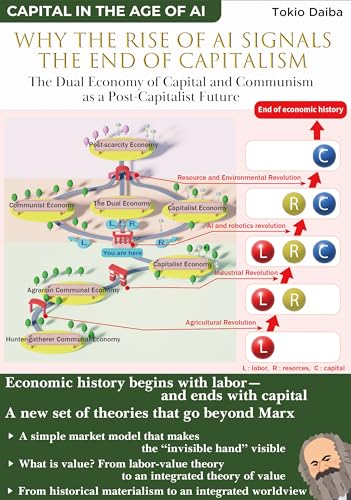
The AI capital boom represents a significant surge in investment focusing on artificial intelligence technologies. This phenomenon is characterized by the rapid development and deployment of AI applications across various sectors, driving an evolution in how businesses and investors approach opportunities. The transformation is not solely about technological advancement; it signifies a paradigm shift in strategic decision-making processes, operational efficiency, and the creation of unexpected market potentials.
At the heart of this capital boom is the potential of AI to process vast amounts of data at unprecedented speeds. Investors are increasingly acknowledging the importance of data-driven insights, enabling them to identify trends and make informed decisions based on predictive analytics. This has led to a robust investment environment where AI technologies are heavily sought after, attracting both venture capital and institutional funding. The demand for effective tools to analyze market possibilities and optimize portfolios is driving the integration of AI into various investment strategies.
Furthermore, the efficiency introduced by artificial intelligence cannot be understated. Algorithms designed to automate routine processes enhance the accuracy of market analyses and eliminate human biases. This automation allows investors to focus on higher-level strategic thinking and long-term planning, further emboldening their investment frameworks. As a result, businesses that embrace AI technology can offer personalized services, optimize customer interactions, and streamline operations, ultimately demonstrating a higher return on investment.
The creation of new investment opportunities also arises from artificial intelligence innovations. Industries that previously lacked access to sophisticated analytics can now leverage AI solutions, leading to previously untapped markets and sectors. In this context, the AI capital boom is fundamentally reshaping the investment landscape, presenting both challenges and opportunities for those willing to adapt and innovate.
Key Drivers Behind AI Investments
The rapid expansion of investments in artificial intelligence (AI) can be attributed to several pivotal factors that are reshaping the investment landscape. One of the foremost drivers is the significant advancements in machine learning algorithms, which have markedly enhanced the capability for predictive analytics and automated decision-making. These advancements enable businesses to harness data in ways that optimize operations, leading to better resource allocation and streamlined processes.
Furthermore, the explosion of data generated in contemporary society necessitates sophisticated data analytics tools. Companies are increasingly seeking to convert vast amounts of data into actionable insights, fostering a demand for AI technologies that can process and analyze this data efficiently. As organizations recognize the value of data-driven strategies, the investment in AI becomes pivotal to maintaining competitive advantages within their industries.
Additionally, the exponential growth in computing power significantly influences AI investments. Innovations in hardware, such as Graphics Processing Units (GPUs) and cloud computing resources, have enabled more complex AI models to be trained in shorter time frames. This has made it feasible for organizations, regardless of their size, to access and utilize advanced AI technologies that were previously only available to large enterprises.
Moreover, the increasing demand for automation across various sectors, including finance, healthcare, and manufacturing, further propels AI investments. As industries seek to minimize human error and reduce operational costs, automation facilitated by AI technology is becoming more prioritized. This need for efficiency is also complemented by the vital role of venture capital firms, which are actively investing in AI startups, thereby fueling innovation and growth in the technology ecosystem.
Case Studies of Successful AI Investments
In recent years, several firms have exemplified how artificial intelligence can enhance investment strategies, leading to improved financial performance. One notable case is that of BlackRock, a global investment management corporation. BlackRock has integrated AI into its risk assessment and portfolio management processes. The firm utilizes machine learning algorithms to analyze vast datasets, enabling it to make more informed decisions about asset allocations. The result is a more resilient investment portfolio that can adapt dynamically to market conditions, ultimately enhancing returns for its clients.
Another prominent example comes from Goldman Sachs, which has adopted AI-driven trading strategies. The company employs algorithmic trading platforms powered by AI to execute trades at optimal prices with high frequency. These AI systems assess market trends and trading volumes in real-time, significantly improving the firm’s execution capabilities. For instance, by leveraging AI, Goldman Sachs has reported increased efficiency in its trading operations, which has translated into better performance in various market environments.
-Digital asset management also benefits from AI, as demonstrated by Wealthfront, an automated investing service. Wealthfront uses AI to create personalized investment strategies for its clients based on their risk tolerance and financial goals. By employing advanced algorithms, the platform can continuously learn from client behavior and market movements, thus adjusting portfolios accordingly. This adaptability not only enhances customer satisfaction but also positions Wealthfront competitively within a rapidly evolving fintech landscape.
These case studies highlight the diverse ways in which AI is transforming investment strategies across the finance sector. The successful integration of artificial intelligence not only optimizes investment processes but also delivers quantifiable benefits, paving the way for firms to achieve competitive advantages and improved financial results.
Challenges and Future Outlook of AI in Investment

The integration of artificial intelligence (AI) in investment strategies brings forth significant opportunities, yet it is not without its challenges. Investors and financial institutions must navigate a landscape fraught with ethical considerations, regulatory challenges, and the risk of excessive dependence on algorithmic trading systems. One major concern is the ethical implications of utilizing AI tools to make investment decisions. Questions about transparency arise, particularly regarding how algorithms are designed and the reasoning behind certain decisions made by these systems. Clarity in the decision-making process is essential to maintain investor trust and ensure accountability.
Regulatory hurdles also present a considerable barrier for the successful incorporation of AI in financial markets. As regulators worldwide attempt to catch up with rapid technological advancements, there is uncertainty regarding compliance frameworks for AI-driven investment practices. Financial institutions must navigate a complex web of local and international regulations, which can often be contradictory or outdated, hindering innovation and adaptation in the marketplace.
Moreover, there exists a risk of over-reliance on AI algorithms. While AI can analyze vast amounts of data and identify patterns beyond human capabilities, it is crucial for investors to maintain a level of skepticism. Algorithms can fail, especially in unpredictable market situations, and human oversight remains indispensable in interpreting results and making informed decisions. The future of AI in investment will likely involve a balanced approach that integrates human insight with AI’s analytical strengths.
Looking ahead, the continued evolution of AI in finance is expected to bring forth exciting trends. Innovations in machine learning and data analytics will refine algorithmic trading, enabling more nuanced investment strategies tailored to individual preferences. As financial markets evolve, the interplay between AI technology and investor decision-making will transform the landscape, potentially leading to more efficient, transparent, and informed investment practices.
Read: https://investsmartedge.com/oracle-corporation-orcl-faces-near-term-pressure-but-ai-and-cloud-growth-remain-intact/